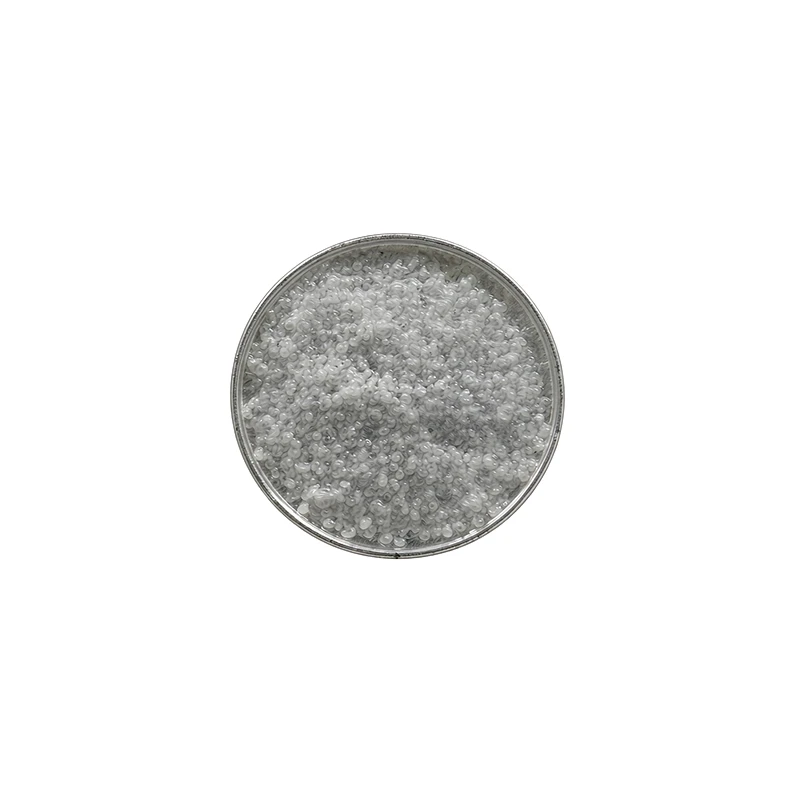
Melt flow index (MFI), simply put, is the ease with which plastic flows at high temperatures. If the MFI of a batch of modified granules fluctuates wildly, shrinkage and flash are highly likely to occur during injection molding; the wall thickness of extruded pipes will also be uneven, and even internal stress cracking may occur. This is precisely why many factories would rather spend more money to buy imported materials than use domestically produced modified materials-because the waste caused by particle size differences far exceeds the price difference of the raw materials themselves.
The word "stability" is precisely the watershed of technical strength in HDPE modified granule production. It not only refers to uniformity within the same batch, but also requires maintaining an extremely narrow fluctuation range in the key parameter of melt flow index between different batches. Behind this lies the test of the entire chain control capability, from raw material selection and formulation design to twin-screw compounding processes and homogenization packaging.
Where does a stable melt flow index come from?
First, it comes from the selection of the base material. The width of the molecular weight distribution directly affects shear sensitivity; to obtain a stable final melt flow index, the batch consistency of the base material itself must be good. Meanwhile, the uniformity of dispersion of fillers, toughening agents, or anti-aging additives in the modified formulation directly determines the microscopic performance of the melt flow index (MFI). For example, if an additive agglomerates in one area, the flowability of that area will change abruptly, making it difficult to stabilize the entire batch of material.
Secondly, precise control of the mixing process is crucial. Even slight drifts in parameters such as the screw combination of the twin-screw extruder, processing temperature, and feed ratio will be amplified in the MFI. Experienced suppliers establish strict online monitoring and batch-to-batch comparison mechanisms to ensure that performance remains within the same target range from the first ton to the hundredth ton.
How to effectively utilize these modified granules?
For manufacturing companies, choosing melt flow index-stabilized HDPE modified granules is not just about buying a material, but also about buying certainty for the production process. Before use, it's advisable to dry the granules at a constant temperature of around 80℃ for 2 hours to avoid interference from trace moisture in the MFI test values. During processing, it's recommended to set the injection molding or extrusion temperature to the middle of the recommended range for the base material, avoiding arbitrarily increasing the shear rate, as this will mask the material's inherent flow characteristics.
Meanwhile, it is recommended to measure the melt flow index (MFI) of each batch of incoming materials as a record and compare it with the physical property data provided by the supplier. Over time, you will find that good modified granules not only improve yield but also stabilize process parameters, bringing tangible returns to the company in terms of cost reduction and efficiency improvement.
In today's increasingly homogenized modified plastics market, the stability of the MFI may be a key benchmark for distinguishing between "usable" and "good."